Resource library

The 4Keeps article bank

Short, honest reads on attraction, readiness, and building something that lasts, drawn from the same frameworks our coaches use with clients. Tap any card to read the full piece.

Understanding love

What is love?

5 min read · 4Keeps training library

There isn't a single "love center" in the brain or one universal cause. Love usually emerges from several systems working together, and the mix differs from person to person. Some of the biggest contributors are:

Repeated positive experiences

People tend to love those with whom they consistently feel safe, understood, appreciated, or joyful. The brain starts associating that person with reward and comfort.

Attachment

As you become emotionally or physically dependent on someone's presence, attachment systems become stronger. Hormones like oxytocin and vasopressin help reinforce long-term bonding, especially through affection, sex, caregiving, and shared routines.

Admiration

Love often grows when you genuinely respect someone's character, competence, values, or resilience. Many lasting relationships contain a strong element of admiration.

Feeling known

Being understood and accepted, especially in areas where you usually hide yourself, creates an unusually powerful bond. Likewise, deeply knowing another person often increases affection.

Investment

Psychologically, we tend to value things we invest in. Time, effort, sacrifices, and shared memories all increase the perceived importance of the relationship.

Chemistry

Some people simply "click." Personality compatibility, humor, conversation style, scent, physical attraction, and even subtle biological factors all contribute.

Shared identity

Couples often begin thinking in terms of "we" rather than "I." Shared goals, traditions, inside jokes, and overcoming challenges together strengthen this.

Novelty followed by stability

Early romance is fueled by dopamine and excitement. Long-term love depends much more on trust, predictability, and emotional security than on constant excitement.

Why do we fall in love with one person instead of another?

This is where it gets more mysterious. Research suggests we unconsciously evaluate many things at once:

  • Physical attraction
  • Personality compatibility
  • Similar values
  • Timing (whether both are emotionally available)
  • Familiarity
  • Emotional needs
  • Shared life goals
  • How the person makes us feel about ourselves

Sometimes someone checks every box on paper but doesn't evoke love. Other times, someone unexpected does. The emotional systems that generate love operate partly outside conscious awareness.

Can you choose to love someone?

You generally can't choose the initial feeling. You can influence whether it grows.

Think of attraction as a spark. Love is more like a fire. You can't always create the spark, but you can create conditions that allow the fire to grow: spending time together, building trust, communicating openly, sharing meaningful experiences, and showing consistent care.

How do you know if you love someone?

There isn't a definitive test, but people who love someone usually notice a pattern of experiences rather than one overwhelming feeling. Common signs include:

  • You genuinely care about their well-being. Their happiness matters to you, even when it doesn't directly benefit you.
  • You want them in your future. When you imagine major life events, they're naturally part of the picture.
  • You accept their imperfections. Certain traits may annoy you, but they don't erase your affection or respect.
  • You admire them. Beyond attraction, you respect who they are or who they're trying to become.
  • You feel emotionally safe. You can be yourself without constantly managing how you come across.
  • You choose them repeatedly. Even after the early excitement fades, you still want to spend time with them.
  • Their successes feel meaningful to you. You celebrate their wins almost as if they were your own.
  • Conflict doesn't automatically make you want to leave. You want to solve problems rather than simply escape them.
  • You miss them, not just the attention. When they're away, it's their unique presence you long for.

It also helps to tell love apart from feelings that can resemble it:

If you mainly feel…It may be…
Obsession, anxiety, needing constant reassuranceInfatuation or anxious attachment
Intense physical attractionLust
Comfort and familiarityAttachment or companionship
Respect and affection, but no romantic desireDeep friendship
Care, admiration, commitment, and romantic attraction togetherRomantic love

Two questions psychologists sometimes suggest asking yourself:

If this person suddenly lost the qualities that currently benefit you, such as status, looks, money, or convenience, would you still deeply care about them and want what's best for them?

If the answer is yes, that's one indicator that your feelings run deeper than attraction or convenience.

When I'm with this person, do I become more like the person I want to be?

Healthy love tends to bring out patience, generosity, honesty, and growth rather than constant insecurity or emotional turmoil.

One last reassurance: love doesn't always feel dramatic. Movies portray it as nonstop intensity, but most people describe lasting love as a blend of warmth, trust, admiration, attraction, and choosing each other over time. Excitement can come and go, while love often becomes quieter and steadier.

What if you feel indifferent? It might be your life, not the person

Sometimes the real question isn't "do I love them?" but "why do I feel nothing right now?" It's quite possible your emotional state has more to do with your circumstances than with the specific person. Stress, from work, uncertainty, family, money, or simply too many demands, shifts the brain into "manage what's in front of me" mode. People commonly notice that they:

  • Feel emotionally flatter than usual.
  • Have less excitement about dating.
  • Don't miss people as intensely.
  • Feel indifferent toward things they'd normally enjoy.
  • Have trouble imagining the future.

None of that necessarily means the love isn't there. The most useful thing to notice is whether your indifference is specific or general. Ask yourself:

  • Do I feel excited about anything right now?
  • Am I looking forward to seeing friends?
  • Do my hobbies still interest me?
  • Do I feel engaged at work?
  • Have I generally felt "meh" about most things lately?

If you've been indifferent about almost everything, it's hard to pin the feeling on one person. If you're enthusiastic about nearly everything else but consistently feel nothing toward them, that points more toward the relationship itself.

Another clue is what actually happens when you're together. Some people spend the week thinking "maybe I'm not that into him," then see him and realize they feel relaxed and happy. Others love the idea of the relationship but still feel disconnected in person. So rather than expecting butterflies or certainty, which go quiet under stress anyway, ask:

When I'm with them, do I feel more at ease, more myself, or more energized than I did before I saw them?

Love doesn't always announce itself with intensity. Sometimes it simply shows up as the sense that your nervous system settles in someone's presence.

Why does love sometimes fade?

Usually because one or more of the things that sustain it erode:

  • Trust is broken.
  • Admiration disappears.
  • Emotional intimacy declines.
  • People stop investing in the relationship.
  • Life goals diverge.
  • Chronic conflict outweighs positive interactions.

Love isn't purely a feeling. It's also a dynamic bond maintained by ongoing experiences. The strongest long-term relationships tend to combine affection, admiration, trust, friendship, attraction, and mutual investment.

This is exactly the kind of thinking our matchmakers and coaches bring to your search. Start your free intake →
Dating readiness

How to know you're really ready to date

7 min read · 4Keeps training library

Readiness isn't about being perfectly healed, having your career figured out, or never thinking about an ex again. It's about being in a place where you can meet someone new from a position of openness rather than need. The difference is subtle, but it changes everything about how dating feels and how it goes.

Here's the trap most people fall into: they treat readiness as a finish line. "Once I've lost the weight, closed the deal, gotten over him, then I'll date." But readiness isn't a gate you pass through once. It's a posture you bring to the table, a mix of self-knowledge, emotional room, and a life you're not trying to escape. You can build it, and you can lose it, and the point of this piece is to help you tell honestly where you are today.

Readiness is a spectrum, not a switch

Almost nobody is 100% ready. If you waited for zero doubts, zero baggage, and perfect timing, you'd wait forever, because those conditions don't exist for anyone. What you're actually looking for is whether the healthy signals outweigh the warning ones, and whether the warning ones are the kind that shrink with time and attention or the kind that get louder the moment things get real.

The question isn't "Am I completely ready?" It's "Am I ready enough to meet someone from a place of choice rather than fear?"

Signs you're ready

  • You've made peace with your last relationship. You can talk about it without anger or longing taking over. It taught you something instead of just hurting you.
  • You want a partner, not a rescue. You're looking to share a good life, not to be saved from a lonely one.
  • You actually like your own life. Your days have meaning whether or not a date goes well, so no single person carries the weight of your happiness.
  • You have room. Real space in your schedule and your attention to let someone in, not just a gap you're trying to fill.
  • You can name what you want. You know the kind of relationship and the kind of person you're looking for, even if the details surprise you later.
  • You can tolerate uncertainty. Dating means not knowing how things will end. If you can sit with "I like this and I don't know where it's going" without needing to define everything on date two, you're in a strong place.
  • You're willing to be seen. Real connection requires letting someone past the polished version. If the idea of being genuinely known feels more exciting than threatening, that's readiness.

Signs it may be worth waiting a little

  • You're still quietly hoping an ex will come back.
  • You're dating to prove something, to yourself or to someone else.
  • The thought of being alone is unbearable, so any company feels better than none.
  • You find yourself looking for the person who hurt you in everyone you meet.
  • You're so afraid of getting hurt again that you're already planning your exit before the first date.
  • Your life feels like a waiting room, on hold until a relationship arrives to start it.

None of these mean you're broken. They mean a little more time, reflection, or support will make your search far more effective when you start. Dating from an unhealed place tends to produce one of two outcomes: you cling to whoever shows interest, or you push away anyone who gets close. Both are exhausting, and both are avoidable.

The myth of being "fully healed"

You will never be a finished product, and you don't need to be. The healthiest daters aren't the ones with no scars; they're the ones who know where their scars are and can say so out loud. "I get a little anxious when plans change" is a sentence a ready person can say. The goal isn't the absence of wounds, it's enough awareness that your wounds don't run the show without your permission.

How to get ready faster

Readiness is something you can build, deliberately, in weeks rather than years. A few things that move the needle most:

  • Build a life you'd be reluctant to interrupt. Friendships, a hobby you love, work that means something. The fuller your life, the less pressure any one date has to carry, and paradoxically, the more attractive you become.
  • Audit your patterns honestly. Look at your last few relationships and ask what you chose and what you tolerated. Patterns you can name are patterns you can change.
  • Fix the one or two habits you already know get in the way. You usually know what they are. Start there.
  • Write down your non-negotiables versus your nice-to-haves. Getting clear on paper keeps you from either settling out of loneliness or rejecting good people over trivia.
  • Practice regulating, not reacting. When something triggers you, the skill is pausing long enough to respond as the person you want to be. That single habit changes the trajectory of a relationship more than almost anything else.

This is exactly what your complimentary mindset assessment and development roadmap are for, included with every 4Keeps membership, so that when introductions begin, you're meeting people as the most grounded version of yourself. Want a partner in the work? A coach can go deeper with you.

A two-minute self-check

Before your next date, or before you decide you're not ready for one, sit with these:

  • If this date goes nowhere, will my week still be good?
  • Am I hoping to meet someone, or hoping to be rescued by someone?
  • Can I describe what I want without describing an ex?
  • Do I have the time and attention a new relationship would actually need?

If most of your answers point toward openness, you're ready enough. Ready doesn't mean fearless; it means willing to show up anyway.

Curious where you stand? Start with a free intake →
Knowing what you want

Green flags, red flags, and real dealbreakers

7 min read · 4Keeps training library

Most dating advice tells you to "watch for red flags," but it rarely explains the difference between a genuine warning sign, a true dealbreaker, and a quirk you've blown out of proportion. Confusing them is how people either tolerate too much or walk away from someone good. Learn to sort them, and you'll waste far less time on the wrong people, and far less doubt on the right ones.

Three categories people constantly mix up

Almost every dating worry falls into one of three buckets. Naming the bucket tells you what to do about it.

What you're noticingWhat it usually is, and what to do
You want different lives (kids, location, faith, lifestyle)Dealbreaker. Honor it early and kindly; love won't dissolve it
A behavior that predicts harm (contempt, dishonesty, control)Red flag. Believe it; it tends to worsen, not improve
Something that's just unfamiliar or imperfectNot a flag. Stay curious before you judge

Dealbreakers vs. red flags

A dealbreaker is a fundamental incompatibility. It's not about the person being bad; it's about the two of you wanting different lives. Wanting children when they don't. Needing to live in different parts of the country. A core values mismatch that no amount of love will dissolve. Dealbreakers are usually clear and stable, and the kindest thing is to honor them early, for both of you.

A red flag is a behavior that predicts harm: dishonesty, contempt, controlling tendencies, an unwillingness to take responsibility, or how they treat people who can do nothing for them. Red flags aren't about compatibility, they're about character, and they tend to get worse, not better, with time.

The distinction matters because the response is different. A dealbreaker means "you're both good people who want different things." A red flag means "this person's behavior will likely cost you." One deserves respect; the other deserves distance.

The subtle red flags that hide in plain sight

The obvious ones, yelling, lying, disappearing, are easy. The costly ones are quieter:

  • Everything is someone else's fault. Every ex was "crazy," every boss unfair, every friendship a betrayal. The common denominator is telling.
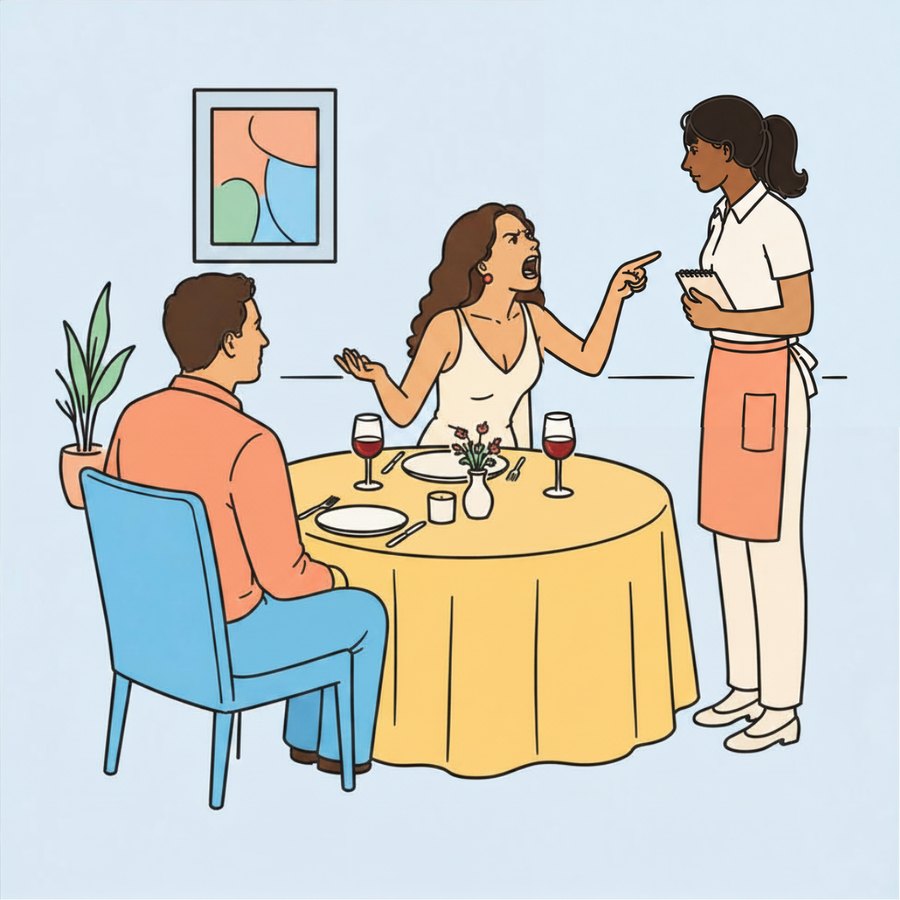
  • Charm that turns off when it's not useful. Warm to you, cold to the server. Watch how they treat people who can't do anything for them.
  • Your gut quietly shrinks. You find yourself editing what you say, softening your opinions, managing their mood. Feeling smaller around someone is data.
  • Words and actions don't match. Big talk about how much they like you, paired with inconsistent effort. Believe the actions.
  • Pushing past your no. On plans, on pace, on boundaries. How someone handles a small "no" predicts how they'll handle a big one.

What's not a red flag

Plenty of things masquerade as warning signs but are really just human:

  • Nervousness on a first date.
  • A life that looks different from yours on the surface.
  • Not feeling instant fireworks.
  • A past that includes failed relationships, everyone's does.
  • Needing a little reassurance early on, as long as it eases with trust.
  • Being different from your "type," which is often exactly the point.

Holding out for someone flawless is its own kind of avoidance. The goal isn't a perfect person; it's the right person, flaws included. Some of the best matches look unremarkable on paper and unmistakable in person.

The green flags worth chasing

  • They're consistent. What they say and what they do line up over time.
  • They repair. After a disagreement, they come back, take responsibility, and reconnect.
  • They're curious about you. They ask real questions and remember the answers.
  • They're kind by default, especially to waitstaff, family, and strangers.
  • You feel more like yourself around them, not less.
  • They're comfortable with your other relationships. Your friends and family are welcome, not competition.
  • They can be wrong gracefully. Being able to say "you're right, I hadn't thought of it that way" is quietly one of the strongest green flags there is.

What to do when you spot a real one

Noticing a red flag isn't the same as reacting well to it. A calm test beats a dramatic confrontation. Name what you saw, watch how they respond, and pay attention to the response more than the explanation. People who take responsibility get curious and a little humble. People who are a problem get defensive, flip it back on you, or make you feel unreasonable for raising it. The response is often more revealing than the original behavior.

Your dealbreaker list will evolve, and that's fine

The list you write at 25 won't be the list you hold at 35, and it shouldn't be. Real experience teaches you which "must-haves" were actually about status or fear, and which quiet qualities you can't live without. The work isn't to freeze your standards; it's to keep them honest, high on the things that determine a life together, and generous on the things that don't.

Before you walk away, ask: is this a difference in who we are, a warning about how they'll treat me, or just a story I'm telling because I'm scared?

One of the quiet advantages of working with a matchmaker is having someone who knows your real dealbreakers, screens for character before you ever meet, and helps you tell a true warning sign from cold feet.

Let us learn your non-negotiables. Start your free intake →
Dating skills

The first date, done right

7 min read · 4Keeps training library

A first date carries far more pressure than it deserves. It isn't an audition, an interview, or a referendum on your worth. It's a low-stakes way to answer one small question: do you want a second one? Treat it that way and almost everything gets easier. The people who date well aren't smoother or better looking, they've simply stopped treating each date as a verdict and started treating it as a conversation.

Plan it well

  • Keep it short and side-by-side. A drink, a coffee, a walk. Something with a natural end so a great date can be extended and an awkward one can wrap up gracefully.
  • Pick somewhere you can actually talk. Skip the loud bar and the movie where you can't say a word.
  • Lower the stakes on purpose. The goal isn't to impress; it's to find out if there's something real to build on.
  • Choose somewhere you feel at home. A place you know quietly steadies your nerves and lets more of the real you show up.
  • Have a soft plan, not a script. Know where you're going and leave room for the night to surprise you.

Steady your nerves before you arrive

Nerves aren't a sign something's wrong; they're a sign you care. The goal isn't to eliminate them, it's to keep them from running the show. A few things help: arrive a couple of minutes early so you're settled rather than scrambling, take a slow breath before you walk in, and reframe the whole evening from "I hope they like me" to "let's find out if I like them." That single shift moves you from performing to noticing, and noticing is where the real information is.

You're not there to be chosen. You're there to choose. Walk in as the person deciding, not the person auditioning.

While you're there

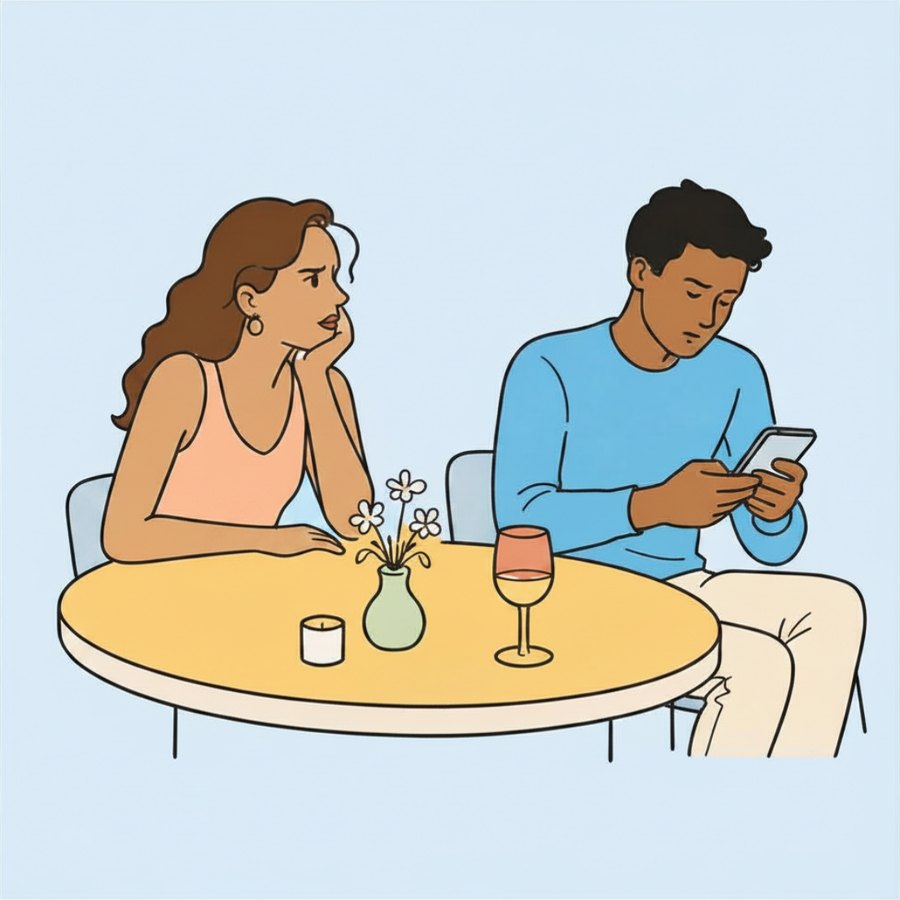
Be curious before you try to be interesting. Ask open questions and actually listen to the answers. Put your phone away, all the way away. Pay attention to how you feel in your body, relaxed and engaged, or guarded and performing. That feeling is data.

Notice how they treat the people around you, how they handle small hiccups, a wrong order, a long wait, and whether the conversation flows both ways. Warmth, presence, and genuine interest tell you more than a perfect résumé ever will.

Conversation that actually connects

Good first-date conversation isn't about clever lines; it's about depth over data. Anyone can trade job titles and hometowns. Connection comes from questions that invite a story:

  • "What's something you're really into right now?"
  • "What does a good weekend look like for you?"
  • "What's something you changed your mind about recently?"
  • "What made you want to meet up tonight?"

Then follow the thread. The magic is rarely in the first answer; it's in the follow-up question that shows you were actually listening. Share, too, don't interrogate. The best conversations volley: they open up a little, you match it, and the disclosure deepens naturally on both sides.

What to ignore

Don't over-read a lack of instant fireworks. Attraction often grows on the second or third meeting once nerves settle, and some of the strongest relationships started as a pleasant, unremarkable first date. Don't try to decide your whole future by the end of the night either, you're only deciding whether you're curious enough to keep going. And don't confuse a smooth performer with a good partner; charm is easy on a first date, character shows up over time.

Reading the signals for a second date

By the end of the night, you don't need certainty, just a lean. Good signs are simple: the conversation kept finding new places to go, you felt more relaxed at the end than the beginning, and you were a little disappointed it was ending. The clearest signal of all is the one people ignore: do you want to see them again? Not "should I," not "do they check the boxes," but do you actually want to. Trust that over the checklist.

Afterward

If you had a good time, say so clearly, and don't play games about timing. A simple "I really enjoyed tonight, I'd love to see you again" is more attractive than any calculated wait. If you didn't feel it, a kind, honest message beats vanishing. Ghosting feels easier in the moment and worse for everyone, including you; how you end things is part of who you are, and word travels.

4Keeps clients get to skip the hardest part of all this: the guessing. We brief you before each introduction and debrief with you after, so every date teaches you something, whether or not it leads to a second.

Want a matchmaker in your corner? Start your free intake →
Relationship science

Attachment styles and why they matter

8 min read · 4Keeps training library

The way you bond with a partner was shaped long before you met them, largely by how dependable connection felt to you growing up. Psychologists call these patterns attachment styles, and understanding yours explains a surprising amount of the friction in dating, plus the way out of it. It's one of the most useful lenses in all of relationship science, because it turns "why do I always do this?" into a pattern you can actually see and work with.

A quick, important caveat: these are tendencies, not personality types or diagnoses. Most people are a blend, lean differently with different partners, and shift over a lifetime. Use this as a mirror, not a label.

The four broad patterns

  • Secure. Comfortable with closeness and with independence. Trusts easily, communicates needs directly, and recovers from conflict without spiraling. Roughly half of people lean this way, and it can be learned.
  • Anxious. Craves closeness but fears it won't last. Tends to over-monitor a partner's mood, seek reassurance, and feel rejection acutely.
  • Avoidant. Values independence and can feel crowded by intimacy. Tends to pull back when things get serious and to equate needing someone with weakness.
  • Disorganized. Wants closeness and fears it at the same time, often a sign of harder early experiences, leading to push-pull dynamics.

How each style actually shows up in dating

The labels are abstract until you see them in real moments. Here's what each tends to look like when a text goes unanswered or things start getting serious.

StyleThe tell, and the underlying fear
SecureAssumes the best, asks directly, stays steady. Fear: minimal, and manageable
AnxiousRereads the message, imagines the worst, seeks reassurance. Fear: "I'll be abandoned"
AvoidantGoes quiet, gets busy, finds a flaw to focus on. Fear: "I'll be trapped or engulfed"
DisorganizedPulls close then pushes away, craves and distrusts the same person. Fear: "closeness is dangerous"

Why it matters in dating

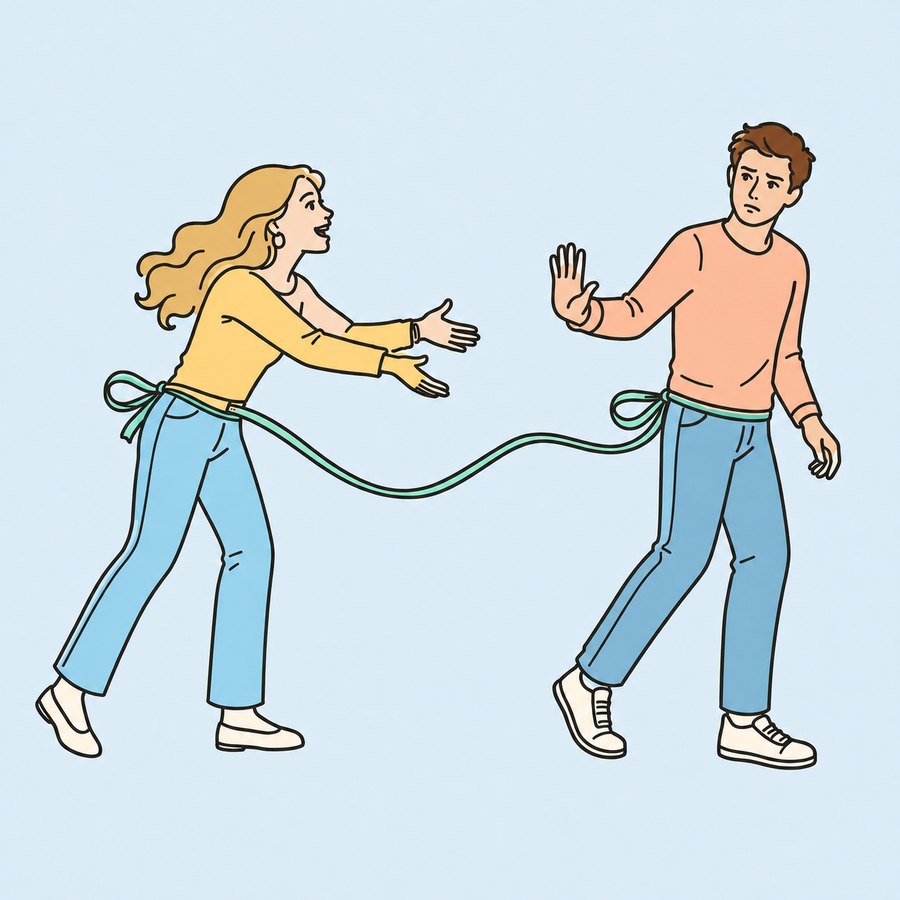
Two patterns famously collide: the anxious partner pursues reassurance just as the avoidant partner pulls away, and each move confirms the other's deepest fear. The anxious pursuit reads as pressure to the avoidant, who withdraws; the withdrawal reads as abandonment to the anxious, who pursues harder. It's a loop that can run for years, and both people usually feel like the victim of it. Recognizing the dance is the first step to stopping it. An anxious person learns that space isn't abandonment; an avoidant person learns that closeness isn't a trap.

This is also why "we have so much chemistry but it's so hard" is such a common story. Intensity and instability can feel like passion when your nervous system is used to uncertainty. Real security often feels calmer, and to an anxious or avoidant person, calm can be misread as boring at first. Learning to value steadiness is part of the growth.

Dating well with the style you have

You don't have to become a different person to date well. You have to work with your wiring honestly.

  • If you lean anxious: slow the pace, keep your own life full, and say your needs plainly instead of testing whether they'll be noticed. "I feel more connected when we make a plan for the week" beats going silent and hoping.
  • If you lean avoidant: notice the urge to find the flaw or create distance right when things get good, and name it instead of acting on it. Practice staying present through the discomfort of closeness; that's where the muscle grows.
  • If you lean disorganized: aim for consistency over intensity, and consider support, a coach or therapist, as you build safety in closeness. Steady partners help enormously here.
  • If you lean secure: protect it, and know your calm is a gift to an anxious or avoidant partner, though it isn't your job to fix anyone.

The good news: attachment can change

Your style is a tendency, not a sentence. People move toward security through self-awareness, through honest communication, and, powerfully, through relationships with secure partners who stay calm and consistent when old fears flare. Psychologists call this "earned security," and it's real: plenty of people who started anxious or avoidant became secure through the right relationships and deliberate practice. Naming your pattern out loud ("I get anxious when I don't hear back") turns a reaction into a conversation, and a conversation is something a partnership can actually work with.

What to look for in a partner

Whatever your own style, dating someone who leans secure is the single biggest advantage you can give a relationship. Secure partners don't punish you for having needs, don't disappear when things get hard, and make it safe to be honest. If you're anxious or avoidant, a secure partner can gently pull you toward security over time. Two insecure styles can absolutely make it work, but it takes more awareness and more repair, going in with eyes open helps.

The goal isn't to find someone with no fears. It's to find someone whose response to your fears, and yours to theirs, makes you both a little more secure over time.

When we match clients, we look past surface chemistry to how two people are likely to handle stress, distance, and repair, because long-term compatibility lives there. And our coaching helps you move toward a more secure way of loving, whoever you end up with.

Want to understand your patterns? Start your free intake →
Lasting love

Turning a spark into something that lasts

8 min read · 4Keeps training library

Early romance and long-term love run on different fuel. The beginning is powered by dopamine, novelty, and the thrill of discovery. What sustains a relationship for years is something quieter and sturdier: trust, predictability, and the steady sense that this person has your back. Knowing the handoff is coming, and welcoming it, is what separates couples who last from couples who fade.

The couples who make it aren't the ones who never lose the spark; they're the ones who understand that the spark was always meant to become something deeper. When the early intensity cools, one couple panics and assumes love is dying, while another recognizes the shift and starts building the sturdier thing. Same moment, opposite outcomes, and the difference is understanding what you're looking at.

What carries a relationship past the spark

  • Trust built through consistency. Small promises kept, again and again, matter more than grand gestures.
  • Repair after conflict. Every couple fights. The lasting ones come back together quickly and take responsibility instead of keeping score.
  • Ongoing investment. Attention, effort, and shared experiences keep a bond alive. Relationships rarely die from a single blow; they fade from neglect.
  • Admiration and friendship. The strongest couples genuinely like and respect each other, not just love each other.
  • A shared "we." Common goals, traditions, and a sense that you're building something together.

The habit that predicts lasting love best

If you could track only one thing, track how a couple handles the small moments of connection. Relationship researchers describe these as "bids," the tiny invitations partners make all day: a comment about something out the window, a hand on the shoulder, "look at this." You can turn toward a bid (respond, engage) or turn away (ignore, dismiss). Couples who stay happy turn toward each other's bids the vast majority of the time. Couples who drift turn away. It's rarely the big betrayals that end most relationships; it's ten thousand small moments of feeling unseen.

Lasting love is built less in the grand gestures and more in whether you look up when they say "hey, come look at this."

Repair is the real skill

Every couple argues; the question is what happens next. The couples who last aren't conflict-free, they're good at repair. A repair can be small: a bit of humor mid-argument, a hand reaching out, "can we start over?", "I got defensive, I'm sorry." What kills relationships isn't disagreement, it's contempt, stonewalling, and letting resentment harden because no one reached back. A partner who can say "I was wrong" and mean it is worth more than one who never fights.

Rituals of connection

Love thrives on small, reliable rhythms far more than on occasional grand events. The couples who feel close usually have a handful of quiet rituals they protect:

  • A real goodbye and hello, a genuine six-second one, not a distracted wave.
  • A standing time to actually talk, phones down, about more than logistics.
  • A weekly something that's just theirs: a walk, a show, a Sunday breakfast.
  • Knowing the small stuff, their current stresses, hopes, and what kind of day they're having.

None of this is expensive or dramatic. It's the infrastructure of intimacy, and it's built through repetition, not intensity.

Keeping novelty alive

Stability doesn't have to mean staleness. Trying new things together, traveling, learning, even small breaks from routine, recreates some of that early dopamine inside a secure relationship. Novelty is what keeps the friendship from calcifying into roommate-hood. The aim is novelty on a foundation of safety, not one instead of the other: safe enough to relax, alive enough to keep discovering each other.

Why love fades, and how to protect against it

Love erodes when trust breaks, admiration disappears, intimacy declines, partners stop investing, life goals quietly diverge, or chronic conflict outweighs the good. Almost all of these are preventable when you notice them early and tend to the relationship on purpose. The dangerous ones are slow: the goodnight kiss that stops, the curiosity that fades into assumption, the small resentments no one names. Fading is rarely a decision; it's an accumulation of un-tended moments, which is exactly why paying attention is so powerful.

Love is a verb

Here's the reframe that changes everything: lasting love is less a feeling you have and more a thing you do. The feeling comes and goes with sleep, stress, and season. The choosing, to turn toward, to repair, to invest, to stay curious, is what actually carries a relationship through the years. On the ordinary days when you don't feel swept away, love is simply the decision to act with care anyway. Do that consistently and the feeling reliably follows.

Love isn't only a feeling, it's a dynamic bond maintained by ongoing experiences. The best long-term relationships combine affection, admiration, trust, friendship, attraction, and mutual investment. Our job at 4Keeps is to start you with someone genuinely compatible, and to give you the tools to keep choosing each other for years.

Looking for the real thing? Start your free intake →
Meeting people

Where to actually meet successful men

7 min read · 4Keeps training library

If you're looking for an ambitious, established partner, the good news is that successful men aren't hiding, they're just busy, and they tend to gather in predictable places. The even better news is that the same qualities that make a man successful, discipline, curiosity, and a full life, also tell you exactly where to find him. You don't need to game a room. You need to spend your time where grounded, driven people already spend theirs, and show up as someone worth knowing.

Start with a better filter than a job title

"Successful" is easy to misread as a salary. The men actually worth your time are successful in a fuller sense: they've built something, they take care of themselves, they have integrity, and they're emotionally available enough to want a real partnership. Chasing status alone tends to attract the wrong version of it. Aim instead for ambition paired with kindness, and you'll both narrow the field and raise its quality.

The goal isn't a man with money. It's a man with a life, one built on the same values you'd want to build a life around.

Where they actually spend their time

Accomplished, relationship-minded men cluster in a handful of predictable settings. The trick is to genuinely belong there, not to show up hunting.

  • Where they train. High-achievers are disproportionately into fitness. Run clubs, cycling and rowing groups, boutique gyms, and endurance events like marathons and triathlons are full of disciplined, social men.
  • Golf, whisky, and the game. Golf lessons, driving ranges, and charity or club golf events; whisky and cigar clubs and tastings; and a good sports bar during a big game. These skew heavily male, social, and easy to strike up a conversation in.
  • The grocery store, believe it or not. The meat section is a genuinely great spot, as are butcher shops and specialty stores like Wild Fork if there's one near you. A man shopping for a good steak is often single, feeding himself, and relaxed. Aim for the after-work window, roughly 5 to 6 pm on a weekday, when the professionals are picking up dinner.
  • Industry and networking events. Conferences, panels, founder meetups, and professional mixers in your city. You don't have to be in the field, many are open to the public or to guests.
  • Philanthropy and boards. Charity galas, fundraisers, nonprofit committees, and volunteer leadership draw men who have both means and a conscience. Giving your time here is worthwhile on its own.
  • Hobby classes with a price of entry. Wine tastings, golf lessons, sailing, cooking classes, language courses, investing or chess clubs. Anything that takes commitment filters for people who follow through.
  • Where they work and refuel. Coffee shops and lunch spots in business districts, co-working spaces, and hotel lobbies and bars near financial or tech hubs, especially on weekday mornings.
  • Alumni and member communities. University alumni events, private and social clubs, and professional associations concentrate accomplished people by design.
  • Travel and shared adventure. Ski trips, sailing charters, curated group travel, and destination endurance events attract men with the time and taste for them.
  • Community and faith. For many grounded men, church, temple, and community organizations are where their week is anchored.
  • A smart trick for the apps. Location still matters online. Spend an afternoon working from a cafe in an affluent neighborhood and set your dating app's distance radius to just one mile. You'll surface the men who actually live and spend time in those areas, instead of casting a wide, noisy net.

Show up so it actually works

Being in the right room is only half of it. The other half is being approachable and consistent.

  • Be a regular, not a tourist. Repetition builds familiarity, and familiarity is where attraction quietly starts. Pick two or three places and show up often.
  • Make yourself easy to approach. Open body language, a warm expression, and a little availability, phone down, head up, beat looking flawless but unreachable.
  • Lead with curiosity. Ask about what he's doing there, his training, his work, his cause. Genuine interest is magnetic and rare.
  • Use the shared context. "How long have you been rowing here?" works because it's natural. You already have something in common, that's the whole point of choosing these places.
  • Bring your own life. The most attractive thing you can offer an accomplished man is that you're accomplished at your own life, whatever that means for you.

The mindset that draws the right man

Successful men have plenty of people who want something from them. What they rarely find is someone who sees them clearly and isn't performing. Warmth, self-respect, and a life you're not looking to be rescued from are what set you apart. Approach from "I'd be a wonderful partner for the right person" rather than "please pick me," and the whole dynamic shifts in your favor.

What to skip

  • Venues that reward flash over substance. The flashiest table at the club is rarely where the marriage-minded man is sitting.
  • Treating it as a transaction. Men worth having can feel it instantly; it repels the good ones and attracts the users.
  • Waiting until you're perfect to go. You meet people by being out, not by being ready.

Bonus: how to tell if he's actually single

Here's a subtle one. When a man is instantly taken with you, he may be tempted to leave out an inconvenient detail, like the fact that he's already attached. One quiet way around it: approach him when he's out with a group of his own friends. A man is far less likely to lie about being single, or to lead you on, when his buddies are standing right there to call him out. The presence of his peers does the honesty-checking for you.

Approaching a man in front of his friends isn't just less intimidating, it's a built-in truth serum. Few men will pretend to be single with their crew listening.

Here's the honest part: doing all of this well takes time most accomplished women don't have, which is a large part of why 4Keeps exists. We already know relationship-ready, successful men, we've vetted their character and their intentions, and we introduce you directly, so you can skip the strategy and just meet someone worth your time.

Rather have them brought to you? Start your free intake →
Making the first move

Where to meet women, and how to approach without being creepy

8 min read · 4Keeps training library

Most men worry that approaching a woman in person is inherently creepy. It isn't. What's creepy is a specific set of behaviors, ignoring her signals, cornering her, refusing to take a no, and those are entirely avoidable. Done with respect, a genuine in-person approach is flattering and increasingly rare. The women you'd most want to meet are often the least approached, because everyone assumes someone else already has.

Where to meet women in real life

Forget the idea that you have to approach strangers cold at a bar. The easiest connections come from places with a built-in reason to talk and see each other again.

  • Anywhere with a shared activity. Classes are the easy mode of meeting people: dance, climbing gyms, cooking, pottery, improv, language courses. You get repeated, low-pressure contact and an automatic reason to talk.
  • Run clubs, rec sports, and hobby groups. Built-in conversation, built-in regularity, and no pressure to perform.
  • Bookstores, coffee shops, and cafes. Relaxed and public, and easy to open with something real about the place or what she's reading.
  • Volunteering and community events. You meet people who share your values, which is a head start on compatibility.
  • Dog parks, farmers markets, and neighborhood spots. Casual settings where a light, natural comment lands easily.
  • Through friends and at gatherings. Still one of the most reliable ways people meet; an existing thread of trust does half the work.
  • Bars and events, with realistic expectations. Fine for practice and fun, just noisier and lower-signal than daytime settings.

The mindset shift that removes the creep factor

The difference between charming and creepy is rarely the words, it's the intent behind them. If your goal is to get something from her, she'll feel it. If your goal is to offer a genuine, no-pressure moment of connection that she's completely free to decline, she'll feel that too. You're not trying to win her. You're saying hello and finding out if there's mutual interest. Hold it that lightly and the pressure drops for both of you.

Approach as an offer, not a demand. You're giving her an easy yes and an easier no, and meaning both.

How to approach, step by step

  • Read the setting first. Is she open to the world, or clearly closed off, headphones in, heads-down working, rushing somewhere? Respect the context. A relaxed cafe is very different from a woman alone at night on a quiet street.
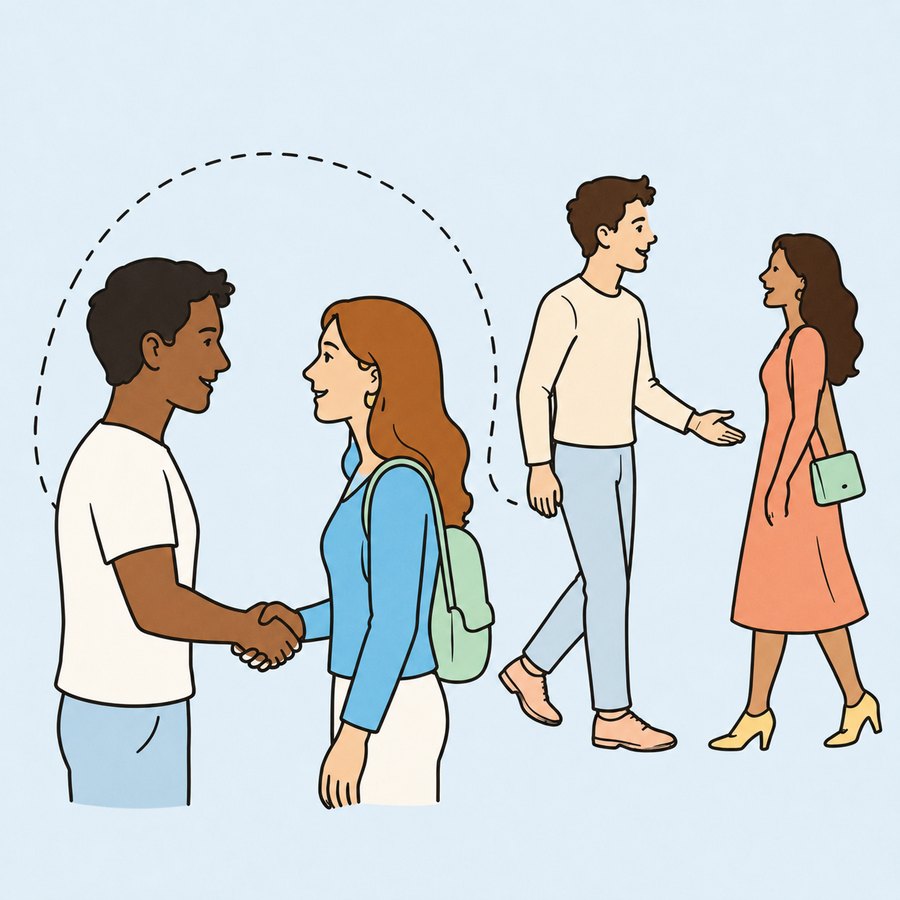
  • Approach from the front, with space. Don't sneak up, loom, or block her path. Come from where she can see you, and leave her an easy exit.
  • Be warm, direct, and honest. "Hi, I know this is a little random, but I saw you and wanted to say hello." Sincerity beats a clever line every time.
  • Keep it short and low-pressure. A minute or two. You're testing for a spark, not delivering a monologue.
  • Watch her response closely. Engaged, smiling, asking you questions back? Keep going. Short answers, turning away, closed body language? Wrap up warmly and let her be.
  • Offer, don't corner. "I'd love to keep talking sometime, can I give you my number, or take yours if you'd like?" lets her choose. Never demand, never guilt.
  • Take a no graciously. "No worries at all, have a great day" is the most attractive possible exit. It proves you were safe to talk to, and it's simply the decent thing.

Reading interest vs. politeness

Many men miss the signals in both directions. Real interest usually shows up as engagement: she asks you questions, keeps the conversation going, angles toward you, laughs easily, lingers. Politeness looks like short, closed answers, minimal follow-up, and small attempts to end it, a glance at the door, a step back, "anyway...". When you're unsure, err on the side of giving her the graceful out. Respecting a soft no builds more attraction than pushing ever could.

What reads as creepyThe respectful version
Continuing after she's clearly disengagedReading her signals and bowing out warmly
Cornering, blocking her path, or followingApproaching from the front, leaving an easy exit
Leading with comments about her bodyLeading with something real about the moment
Demanding her number or guilt-tripping a noOffering yours and letting her choose
Making it about what you want from herMaking it a genuine, pressure-free hello

Rejection is normal, and fine

Even done perfectly, plenty of approaches won't lead anywhere. She may be taken, busy, or simply not feeling it, and none of that is a verdict on you. The men who date well aren't the ones who never get turned down; they're the ones who can hear a no, wish her well, and move on unbothered. That resilience is exactly what makes the next approach relaxed and attractive.

If cold approaches aren't your thing, you're in good company, they're hard, and the odds are stacked. That's the case for a matchmaker: we introduce you to women who are single, screened, and actively want to meet someone, so the only thing left for you to bring is a genuine hello.

Prefer a warm introduction to a cold approach? Start your free intake →
Free resource

100 creative date ideas

Stuck on "so, what do you want to do?" Here are 100 ideas, sorted by what the two of you are into, from big adventures to cozy nights in. Steal freely.

Adventurous & outdoorsy

  1. Sunrise hike with coffee at the summit
  2. Rent kayaks or a canoe for the afternoon
  3. Go rock climbing at an indoor gym
  4. Take a beginner surf or paddleboard lesson
  5. Plan a spontaneous road trip with no fixed destination
  6. Go camping and stargaze away from city lights
  7. Rent bikes and ride a scenic trail
  8. Try an outdoor ropes or zip-line course
  9. Go horseback riding
  10. Chase a waterfall and pack a picnic

Foodie & culinary

  1. Take a cooking class for a cuisine neither of you knows
  2. Do a self-guided taco or dumpling crawl
  3. Visit a farmers market and cook what you find
  4. Book a wine, whiskey, or coffee tasting
  5. Recreate a restaurant dish at home together
  6. Try the highest-rated hole-in-the-wall in town
  7. Have a blind taste-test challenge
  8. Build your own pizzas from scratch
  9. Go on a dessert-only date, hitting three spots
  10. Tour a local brewery, distillery, or chocolate maker

Creative & artsy

  1. Paint-and-sip night, at a studio or at home
  2. Take a pottery wheel class
  3. Visit a gallery and invent stories for each piece
  4. Do a couple's photo walk and trade cameras
  5. Try a hand-lettering or printmaking workshop
  6. Build something together at a maker space
  7. Write each other a short story or song
  8. Go to a live painting or improv comedy show
  9. Tackle a pottery, candle, or soap-making kit
  10. Sketch each other, talent absolutely optional

Cozy & low-key

  1. Themed movie marathon with matching snacks
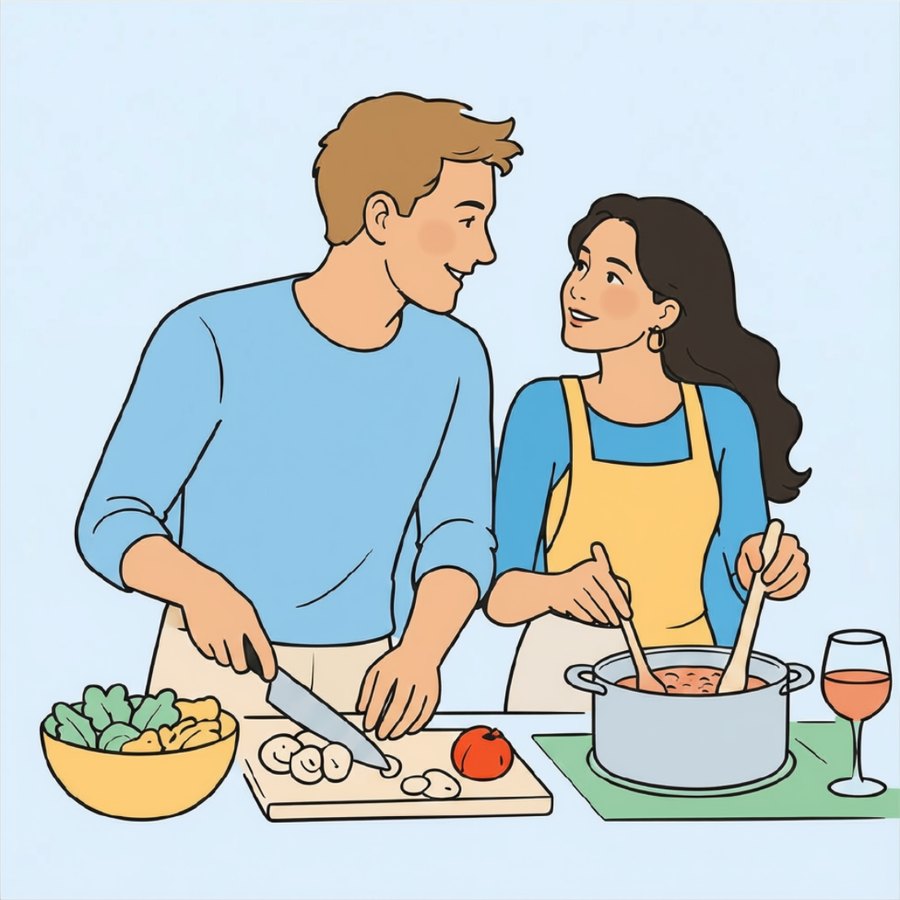
  2. Cook a slow dinner together with no phones
  3. Build a blanket fort and play board games
  4. Do a puzzle over a bottle of wine
  5. Bake something ambitious from scratch
  6. Have a living-room picnic and people-watch out the window
  7. Read the same book and discuss a chapter a night
  8. Give each other a spa night, face masks and all
  9. Make a shared playlist and trade favorite songs
  10. Stargaze from the backyard or a rooftop

Cultural & curious

  1. Explore a museum and pick a favorite room each
  2. Catch a play, ballet, or live orchestra
  3. Wander a neighborhood you've never visited
  4. Go to a poetry reading or author talk
  5. Browse a used bookstore and buy each other a pick
  6. Visit a botanical garden or conservatory
  7. Tour a historic home or local landmark
  8. Hit a street fair, festival, or cultural celebration
  9. Go record shopping and play your finds later
  10. Take a guided walking history tour of your own city

Active & sporty

  1. Play a round of mini golf, loser buys ice cream
  2. Hit a batting cage or driving range
  3. Go bowling and invent your own rules
  4. Take a dance class, salsa, swing, or two-step
  5. Try indoor skydiving or trampoline park
  6. Go ice skating or roller skating
  7. Play tennis, pickleball, or table tennis
  8. Take a partner yoga or spin class together
  9. Go to a live game and split a giant pretzel
  10. Rent a tandem bike or paddle boat

Playful & fun

  1. Escape room, see how you problem-solve together
  2. Spend an evening at an arcade or barcade
  3. Go to a trivia night and form a team of two
  4. Visit an amusement park or local fair
  5. Throw axes at an axe-throwing range
  6. Play laser tag or go-karts
  7. Do a scavenger hunt around the city
  8. Visit an aquarium or petting zoo
  9. Have a themed costume night at home
  10. Go to a comedy club

Romantic & memorable

  1. Sunset picnic with a view
  2. Slow dance in the kitchen to a favorite song
  3. Take a hot air balloon ride
  4. Recreate your very first date
  5. Book a couples massage
  6. Watch the sunrise after staying up talking
  7. Write letters to open on a future anniversary
  8. Take a weekend trip to a town neither has seen
  9. Stargaze and name a "your" constellation
  10. Have a candlelit dinner you cooked together

Learning & growth

  1. Take a language class and practice on each other
  2. Learn a magic trick or card game together
  3. Visit a planetarium or science center
  4. Take a mixology or latte-art workshop
  5. Attend a lecture or workshop on a shared interest
  6. Learn to play one song on an instrument
  7. Do a personality quiz and talk through the results
  8. Take a self-defense or first-aid class
  9. Start a tiny garden or grow herbs together
  10. Plan a future trip you both want to take

Free & budget-friendly

  1. Golden-hour walk somewhere pretty
  2. Free museum or gallery day
  3. Volunteer together for an afternoon
  4. Window-shop and design your dream home
  5. Pack a thermos and watch the sunset
  6. Explore a farmers market with five dollars each
  7. Take the dog (yours or a friend's) to the park
  8. Have a backyard or living-room camp-out
  9. Find a free outdoor concert or movie night
  10. Do a "tourist in your own town" day on foot

Ready to give your search every advantage?

Start with a free, no-pressure intake. We'll point you to the right resources, line up the coaching or profile makeover that fits, and put a matchmaker in your corner.

Start your free intake