 Lasting love
Turning a spark into something that lasts
Published · 8 min read · 4Keeps training library
Early romance and long-term love run on different fuel. The beginning is powered by dopamine, novelty, and the thrill of discovery. What sustains a relationship for years is something quieter and sturdier: trust, predictability, and the steady sense that this person has your back. Knowing the handoff is coming, and welcoming it, is what separates couples who last from couples who fade.
The couples who make it aren't the ones who never lose the spark; they're the ones who understand that the spark was always meant to become something deeper. When the early intensity cools, one couple panics and assumes love is dying, while another recognizes the shift and starts building the sturdier thing. Same moment, opposite outcomes, and the difference is understanding what you're looking at.
What carries a relationship past the spark
- Trust built through consistency. Small promises kept, again and again, matter more than grand gestures.
- Repair after conflict. Every couple fights. The lasting ones come back together quickly and take responsibility instead of keeping score.
- Ongoing investment. Attention, effort, and shared experiences keep a bond alive. Relationships rarely die from a single blow; they fade from neglect.
- Admiration and friendship. The strongest couples genuinely like and respect each other, not just love each other.
- A shared "we." Common goals, traditions, and a sense that you're building something together.
The habit that predicts lasting love best
If you could track only one thing, track how a couple handles the small moments of connection. Relationship researchers describe these as "bids," the tiny invitations partners make all day: a comment about something out the window, a hand on the shoulder, "look at this." You can turn toward a bid (respond, engage) or turn away (ignore, dismiss). Couples who stay happy turn toward each other's bids the vast majority of the time. Couples who drift turn away. It's rarely the big betrayals that end most relationships; it's ten thousand small moments of feeling unseen.
Lasting love is built less in the grand gestures and more in whether you look up when they say "hey, come look at this."
Repair is the real skill
Every couple argues; the question is what happens next. The couples who last aren't conflict-free, they're good at repair. A repair can be small: a bit of humor mid-argument, a hand reaching out, "can we start over?", "I got defensive, I'm sorry." What kills relationships isn't disagreement, it's contempt, stonewalling, and letting resentment harden because no one reached back. A partner who can say "I was wrong" and mean it is worth more than one who never fights.
Rituals of connection
Love thrives on small, reliable rhythms far more than on occasional grand events. The couples who feel close usually have a handful of quiet rituals they protect:
- A real goodbye and hello, a genuine six-second one, not a distracted wave.
- A standing time to actually talk, phones down, about more than logistics.
- A weekly something that's just theirs: a walk, a show, a Sunday breakfast.
- Knowing the small stuff, their current stresses, hopes, and what kind of day they're having.
None of this is expensive or dramatic. It's the infrastructure of intimacy, and it's built through repetition, not intensity.
Keeping novelty alive
Stability doesn't have to mean staleness. Trying new things together, traveling, learning, even small breaks from routine, recreates some of that early dopamine inside a secure relationship. Novelty is what keeps the friendship from calcifying into roommate-hood. The aim is novelty on a foundation of safety, not one instead of the other: safe enough to relax, alive enough to keep discovering each other.
Why love fades, and how to protect against it
Love erodes when trust breaks, admiration disappears, intimacy declines, partners stop investing, life goals quietly diverge, or chronic conflict outweighs the good. Almost all of these are preventable when you notice them early and tend to the relationship on purpose. The dangerous ones are slow: the goodnight kiss that stops, the curiosity that fades into assumption, the small resentments no one names. Fading is rarely a decision; it's an accumulation of un-tended moments, which is exactly why paying attention is so powerful.
Love is a verb
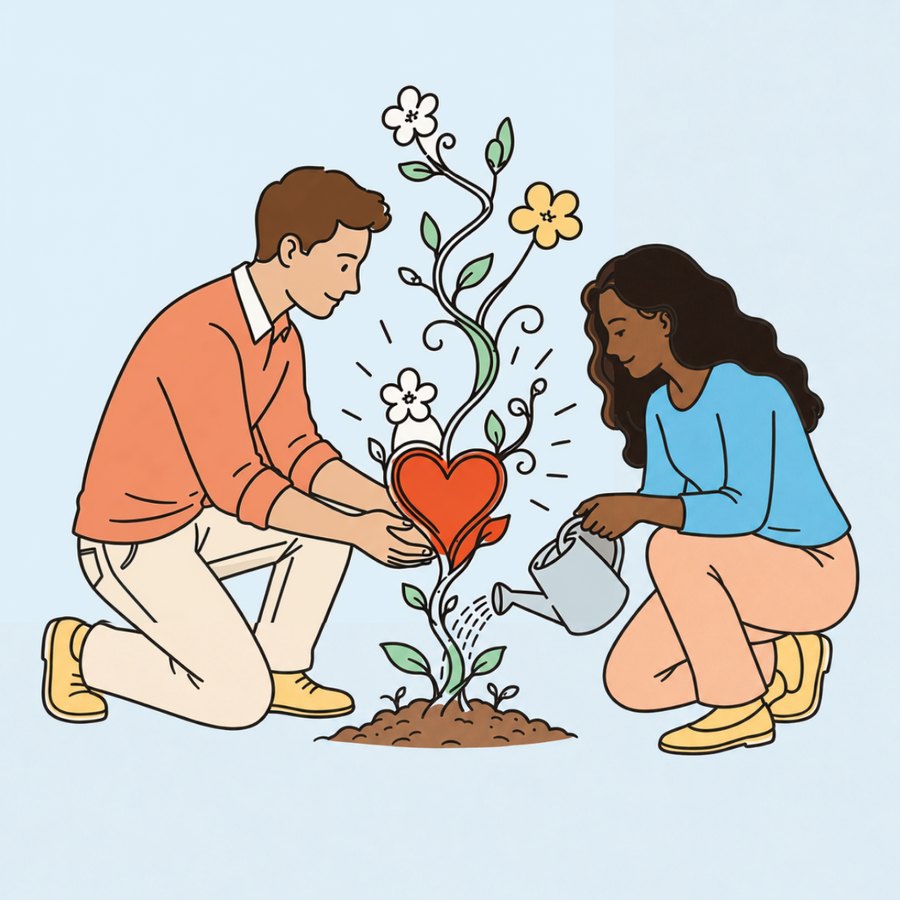
Here's the reframe that changes everything: lasting love is less a feeling you have and more a thing you do. The feeling comes and goes with sleep, stress, and season. The choosing, to turn toward, to repair, to invest, to stay curious, is what actually carries a relationship through the years. On the ordinary days when you don't feel swept away, love is simply the decision to act with care anyway. Do that consistently and the feeling reliably follows.
Love isn't only a feeling, it's a dynamic bond maintained by ongoing experiences. The best long-term relationships combine affection, admiration, trust, friendship, attraction, and mutual investment. Our job at 4Keeps is to start you with someone genuinely compatible, and to give you the tools to keep choosing each other for years.
Sources
- The Gottman Institute, “An introduction to emotional bids and trust” — in the newlywed observation studies, couples still together six years later had turned toward each other's bids 86% of the time, versus 33% for those who divorced.