 For everyone
Safety & vetting
For everyone
Safety & vetting
How to run a background check
Published · 8 min read · By Julia, 4Keeps
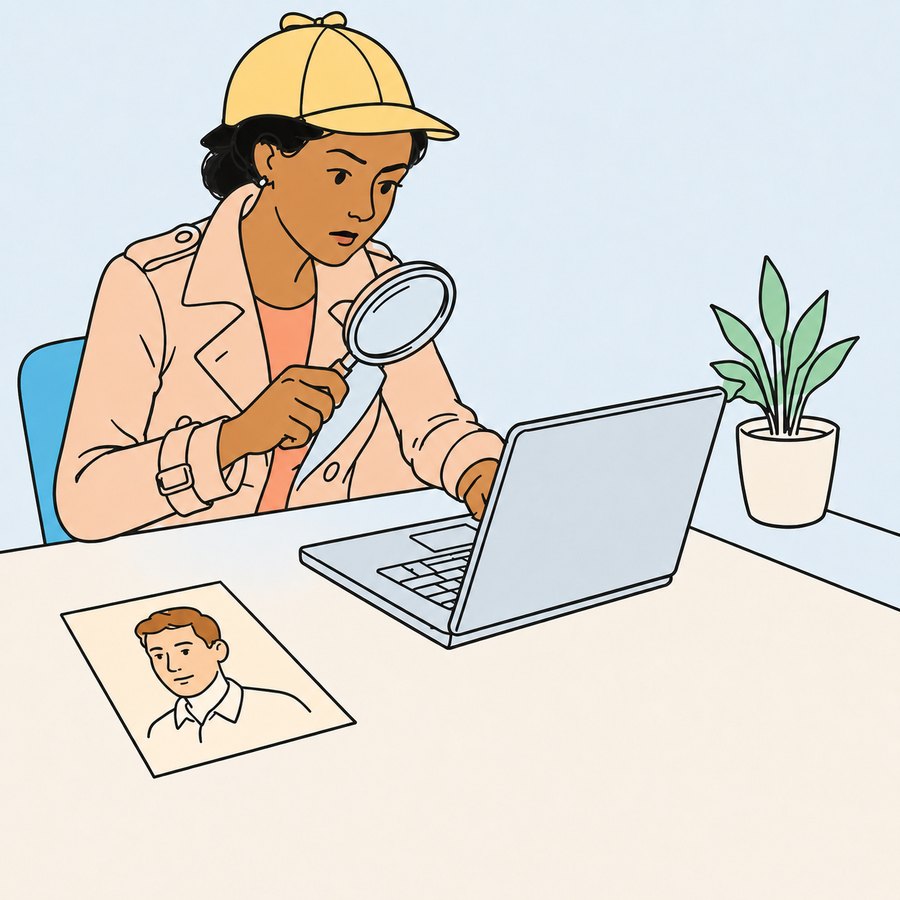
Online dating asks you to do something your grandparents never had to: meet a total stranger, alone, on the strength of a few photos and a bio they wrote themselves. Most people you'll meet are exactly who they say they are. But a small number aren't, and the cost of that small number can be high, from wasted months on someone hiding a marriage to genuine safety risk. Running a basic background check isn't paranoid or insulting. It's the same ordinary due diligence you'd do before wiring money or signing a lease, applied to a person you might one day let into your life.
Done right, it's quiet, quick, and something you never have to mention. Here's when to do it, how to do it, what you can actually learn, and where the legal and ethical lines are.
A background check isn't about distrust. It's about verifying that the person matches the story, before you invest your time, heart, or safety.
When to do it
You don't need a full report on everyone who likes your profile. The right triggers are:
- Before you meet in person. At minimum, a quick self-check that they're a real person who is who they claim.
- Before it gets serious. Before you're exclusive, meeting family, sharing money, or moving in, a deeper look is reasonable.
- Any time something feels off. A story that keeps changing, a refusal to video chat, a blurry past, or a name they seem cagey about. Trust that instinct and verify.
- Long-distance or whirlwind situations. Where feelings move fast and in-person cues are missing, verification matters more, not less.
Start free: the checks you can do yourself
Before paying for anything, a surprising amount is available with nothing but their name and a little time. Do this first:
- Search their full name in quotes, with their city, job, or school. Look for a normal digital footprint, a LinkedIn, an employer page, news mentions. A total absence of any trace can itself be a small flag.
- Reverse image search their photos. Save their profile pictures and run them through a reverse image tool. If the same face turns up under a different name, or the photos are stock or stolen, you've caught a catfish before the first date.
- Cross-check their social media. Do the details line up? Same job, same city, real friends and history, or a suspiciously new account with few connections? Note whether their "single" status squares with what you see.
- Verify the concrete claims. If they say they're a doctor at a certain hospital or run a company, those things are usually checkable. Honest people check out easily.
- Search the name plus words like "arrest," "lawsuit," or "review." Public news and court coverage sometimes surfaces this way for free.
For a lot of people, this free pass is enough. It confirms they're real, consistent, and unhidden, and you can move on with a clearer head.
Paid background checks: what they show
If you want more, or the free check raised questions, paid public-records services (people-search sites like BeenVerified, TruthFinder, Instant Checkmate, Spokeo and similar) compile public records into a single report, usually for a modest one-time or monthly fee. With a name and rough location, a report can surface:
| What a report can surface | Why it matters |
|---|---|
| Criminal records and arrests | The big one for safety. Pay closest attention to violence, assault, stalking, or sex offenses. |
| Marriage & divorce records | Confirms whether "single" is true, or whether there's an undisclosed spouse. |
| Address history & aliases | A trail of names or a location that doesn't match their story is worth a second look. |
| Bankruptcies, liens, judgments | Not disqualifying on their own, but relevant before you entangle finances. |
| Sex-offender registry status | Also checkable free on the public national registry. Always worth confirming. |
What to look for, and what to weigh lightly
A report is data, not a verdict. Read it with proportion:
- Take seriously: a hidden current marriage, any history of violence or a protective order, a pattern of fraud, or an identity that simply doesn't match the person you've been talking to. These are the findings a check exists to catch.
- Weigh in context: an old, minor, non-violent offense from decades ago, a past bankruptcy, a messy but resolved lawsuit. People grow and rebuild. What matters is the pattern and the honesty, not one line item.
- The biggest red flag is the mismatch. The problem is rarely the fact itself, it's discovering the fact was hidden or lied about. A person open about their past is safer than a spotless one who conceals.
The limits and the legal lines
A few things to keep honest and safe:
- These reports are not always accurate. People-search data can be outdated, incomplete, or confuse two people with the same name. Treat a finding as a lead to confirm, not proof.
- Don't use them for the wrong purpose. In the U.S., the Fair Credit Reporting Act (FCRA) governs checks used for employment, housing, or credit. Consumer people-search sites explicitly forbid using their reports for those purposes. Personal dating due-diligence is fine; screening a tenant or employee this way is not.
- A clean report is not a guarantee. Plenty of harmful behavior never reaches a public record. A check reduces risk; it doesn't remove it. It never replaces meeting smart and trusting your gut.
The safety basics a check can't replace
However thoroughly you vet, the first few meetings still call for ordinary precautions: video chat before you meet, meet in a public place, drive yourself or arrange your own way home, keep your own tab, and tell a friend where you'll be and when to expect you back. Verification and street smarts work together; neither substitutes for the other.
The bottom line
Checking someone out before you meet them isn't cynical, it's self-respecting. Start with the free searches, which quietly clear most people. Go deeper when something's serious or something's off. Read what you find with proportion, watching above all for the gap between the story and the record. Do that, and you spend your dating energy on the honest, real, safe people who make it through, exactly where it belongs.