 For everyone
Attachment
For everyone
Attachment
Getting through the early power struggle
Published · 7 min read · By Julia, 4Keeps
Every new relationship has a hidden dynamic in its first weeks that almost nobody names out loud: a quiet power struggle. It isn't about who's in charge, and there's usually no villain. It's about who, often by accident, sets the emotional tempo, and how the other person's nervous system answers. Here's the part that surprises people: even two secure, well-adjusted adults can get knocked into anxious or avoidant patterns by it, purely from a little bad timing and unclear communication.
Attachment isn't fixed, it's reactive
We talk about attachment styles as if they were permanent traits, "I'm secure," "he's avoidant," but in the early days they behave more like weather than climate. Secure attachment is a tendency, not armor. Someone who is secure in general can turn momentarily anxious, chasing, over-texting, refreshing the thread for a reply, or momentarily avoidant, going quiet, needing space, feeling crowded, in direct response to what the other person just did. Before trust is built, there's no track record to steady you, so a single accident, a forgotten call-back, a dry one-word text, a plan left vague, can be enough to tip a perfectly secure person off balance.
The sumo ring
Picture the whole thing as a sumo match, seen from above.
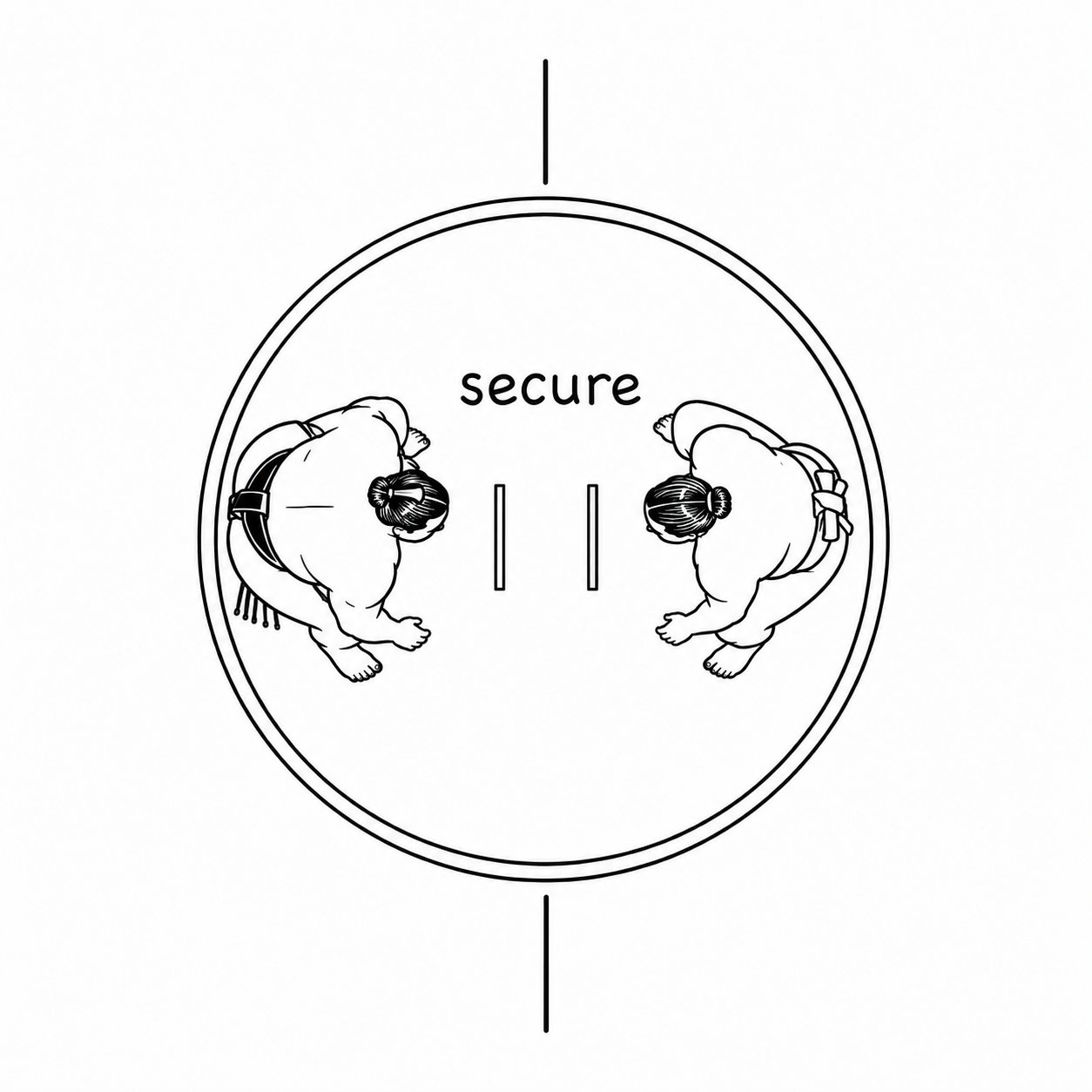
When both people stand centered in the ring, balanced, facing each other, weight even, that's two secure partners. One edge of the ring is the anxious edge; the opposite edge is the avoidant edge. At the start, neither of you is anywhere near either one.
Then someone sets the power dynamic, usually without meaning to. He forgets to call back. That's the first shove. It nudges her off-center, toward the anxious edge: now she's wondering, reaching, "did I do something? why haven't I heard from him?" The worry leaks into her next few messages, a little pressure, a little testing. And that shoves back. Feeling the neediness, he slides toward the avoidant edge, pulling away, wanting room, going quieter still, which lands on her as another, bigger shove toward anxious.
Nobody chose to be anxious or avoidant. One accidental shove set the dynamic, and each reaction pushed the other a little further from center.
That's the domino effect. What began as a logistics slip becomes a self-reinforcing dance, one person chasing, one person fleeing, each drifting further out toward opposite edges of the ring, further and further from the centered, secure middle where they both started. Left alone, it can quietly define the whole relationship, or end it, long before either person realizes the fight was never really about a missed call.
How the dominoes fall
- The accident. A missed call, a slow reply, plans left fuzzy. No message intended, just life getting in the way.
- The interpretation. One person, with no track record to lean on yet, reads meaning into it.
- The protest. Anxiety shows up as pursuit: double-texting, hinting, seeking reassurance, testing.
- The retreat. The other feels the pressure or the loss of freedom and pulls back to breathe.
- The spiral. Each move confirms the other's worst read, so both push harder in opposite directions.
How to stay centered
- Assume accident, not intent. Most early misses are logistics, not messages. Give the benefit of the doubt before your imagination writes the story for you.
- Name it early and lightly. A calm, honest "hey, didn't hear back and my brain started spinning a little, all good?" defuses far more than either protesting or going cold.
- Regulate before you react. The pause between feeling shoved and responding is where the whole match is won or lost. Take the beat.
- Handle the boring logistics. A two-second "slammed today, talk tomorrow" keeps the shove from ever landing. So much of this struggle is just missing information.
- Don't answer a wobble with a bigger wobble. If they pull back, resist chasing harder; if they get anxious, resist going colder. Meeting a shove with a shove is how the dominoes keep falling.
- Keep your own footing. A full life outside the relationship, friends, work, things you love, is the ballast that keeps you near center when the ring tilts.
Why the early stage is the hardest
All of this is loudest at the beginning for one simple reason: there's no history yet. The same unanswered text that means nothing at year two can feel like the end of the world at week two, because you have no shared record telling you it's fine. That's also why the power struggle eases with time, not because the accidents stop, but because trust accumulates. Every returned call, every kept plan, every repair after a wobble widens the secure center of the ring and makes it harder for either of you to be shoved out of it.
The couples who make it through aren't the ones who never get knocked off balance. They're the ones who feel the drift early, recognize the dance for what it is, and deliberately step back toward the middle, together. Because the goal of the early stage was never to win the ring. It's to stop wrestling and stand in the center, on the same side.