 Relationship science
Attachment styles and why they matter
Published · 8 min read · 4Keeps training library
The way you bond with a partner was shaped long before you met them, largely by how dependable connection felt to you growing up. Psychologists call these patterns attachment styles, and understanding yours explains a surprising amount of the friction in dating, plus the way out of it. It's one of the most useful lenses in all of relationship science, because it turns "why do I always do this?" into a pattern you can actually see and work with.
A quick, important caveat: these are tendencies, not personality types or diagnoses. Most people are a blend, lean differently with different partners, and shift over a lifetime. Use this as a mirror, not a label.
The four broad patterns
- Secure. Comfortable with closeness and with independence. Trusts easily, communicates needs directly, and recovers from conflict without spiraling. Roughly half of people lean this way, and it can be learned.
- Anxious. Craves closeness but fears it won't last. Tends to over-monitor a partner's mood, seek reassurance, and feel rejection acutely.
- Avoidant. Values independence and can feel crowded by intimacy. Tends to pull back when things get serious and to equate needing someone with weakness.
- Disorganized. Wants closeness and fears it at the same time, often a sign of harder early experiences, leading to push-pull dynamics.
How each style actually shows up in dating
The labels are abstract until you see them in real moments. Here's what each tends to look like when a text goes unanswered or things start getting serious.
| Style | The tell, and the underlying fear |
|---|---|
| Secure | Assumes the best, asks directly, stays steady. Fear: minimal, and manageable |
| Anxious | Rereads the message, imagines the worst, seeks reassurance. Fear: "I'll be abandoned" |
| Avoidant | Goes quiet, gets busy, finds a flaw to focus on. Fear: "I'll be trapped or engulfed" |
| Disorganized | Pulls close then pushes away, craves and distrusts the same person. Fear: "closeness is dangerous" |
Why it matters in dating
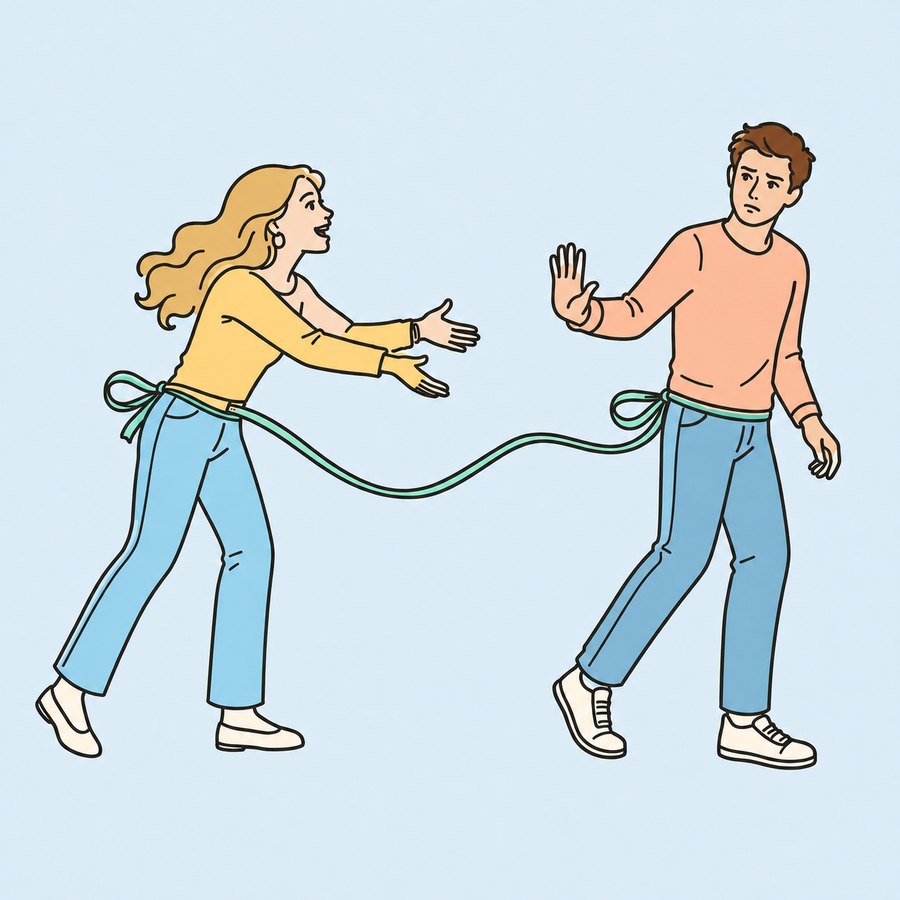
Two patterns famously collide: the anxious partner pursues reassurance just as the avoidant partner pulls away, and each move confirms the other's deepest fear. The anxious pursuit reads as pressure to the avoidant, who withdraws; the withdrawal reads as abandonment to the anxious, who pursues harder. It's a loop that can run for years, and both people usually feel like the victim of it. Recognizing the dance is the first step to stopping it. An anxious person learns that space isn't abandonment; an avoidant person learns that closeness isn't a trap.
This is also why "we have so much chemistry but it's so hard" is such a common story. Intensity and instability can feel like passion when your nervous system is used to uncertainty. Real security often feels calmer, and to an anxious or avoidant person, calm can be misread as boring at first. Learning to value steadiness is part of the growth.
Dating well with the style you have
You don't have to become a different person to date well. You have to work with your wiring honestly.
- If you lean anxious: slow the pace, keep your own life full, and say your needs plainly instead of testing whether they'll be noticed. "I feel more connected when we make a plan for the week" beats going silent and hoping.
- If you lean avoidant: notice the urge to find the flaw or create distance right when things get good, and name it instead of acting on it. Practice staying present through the discomfort of closeness; that's where the muscle grows.
- If you lean disorganized: aim for consistency over intensity, and consider support, a coach or therapist, as you build safety in closeness. Steady partners help enormously here.
- If you lean secure: protect it, and know your calm is a gift to an anxious or avoidant partner, though it isn't your job to fix anyone.
The good news: attachment can change
Your style is a tendency, not a sentence. People move toward security through self-awareness, through honest communication, and, powerfully, through relationships with secure partners who stay calm and consistent when old fears flare. Psychologists call this "earned security," and it's real: plenty of people who started anxious or avoidant became secure through the right relationships and deliberate practice. Naming your pattern out loud ("I get anxious when I don't hear back") turns a reaction into a conversation, and a conversation is something a partnership can actually work with.
What to look for in a partner
Whatever your own style, dating someone who leans secure is the single biggest advantage you can give a relationship. Secure partners don't punish you for having needs, don't disappear when things get hard, and make it safe to be honest. If you're anxious or avoidant, a secure partner can gently pull you toward security over time. Two insecure styles can absolutely make it work, but it takes more awareness and more repair, going in with eyes open helps.
The goal isn't to find someone with no fears. It's to find someone whose response to your fears, and yours to theirs, makes you both a little more secure over time.
When we match clients, we look past surface chemistry to how two people are likely to handle stress, distance, and repair, because long-term compatibility lives there. And our coaching helps you move toward a more secure way of loving, whoever you end up with.